Human problem · Hybrid work
Microsoft Places and MyHub
Making the trip to the office worth it: who’s in, where to sit, how to get there, and where to eat.
Role: Design leadership · experience strategy
The human problem
After the pandemic, the office had to earn the commute. People came in to be with their team, and the questions started before they left home: Who will be there? Where can we sit together? How do I get there, and where do I eat?
The answers were spread across many separate tools, and none of them talked to each other.
Chapter 01
Mapping the whole day
We mapped the full employee day, before, during and after the office, scenario by scenario, with the needs, jobs to be done and opportunities at each step. The map made one thing clear: the office is a social destination, not a desk.
Chapter 02
Measuring where we stood
Before redesigning anything, we measured. I introduced the System Usability Scale (SUS) across the major workstreams: commute, dining, parking and smart building, and compared the mobile app with the web. The baseline gave the team and our partners a shared, honest starting point, and it showed where to focus first.
Then we made it a habit. My team ran SUS on a monthly cycle to track the effect of every UI and UX change, and I built it into annual planning so feature decisions were negotiated with data, not opinion. Internal scores are not published here.
Chapter 03
Designing the office as a destination
The Places experience starts with the day, not a floor plan. Today brings together your meetings, your building, who else is coming in, and your bookings. Find a place shows neighborhoods by open seats and by who is sitting there. Lunch appears on the map as an invitation to join colleagues, with the menu one tap away.
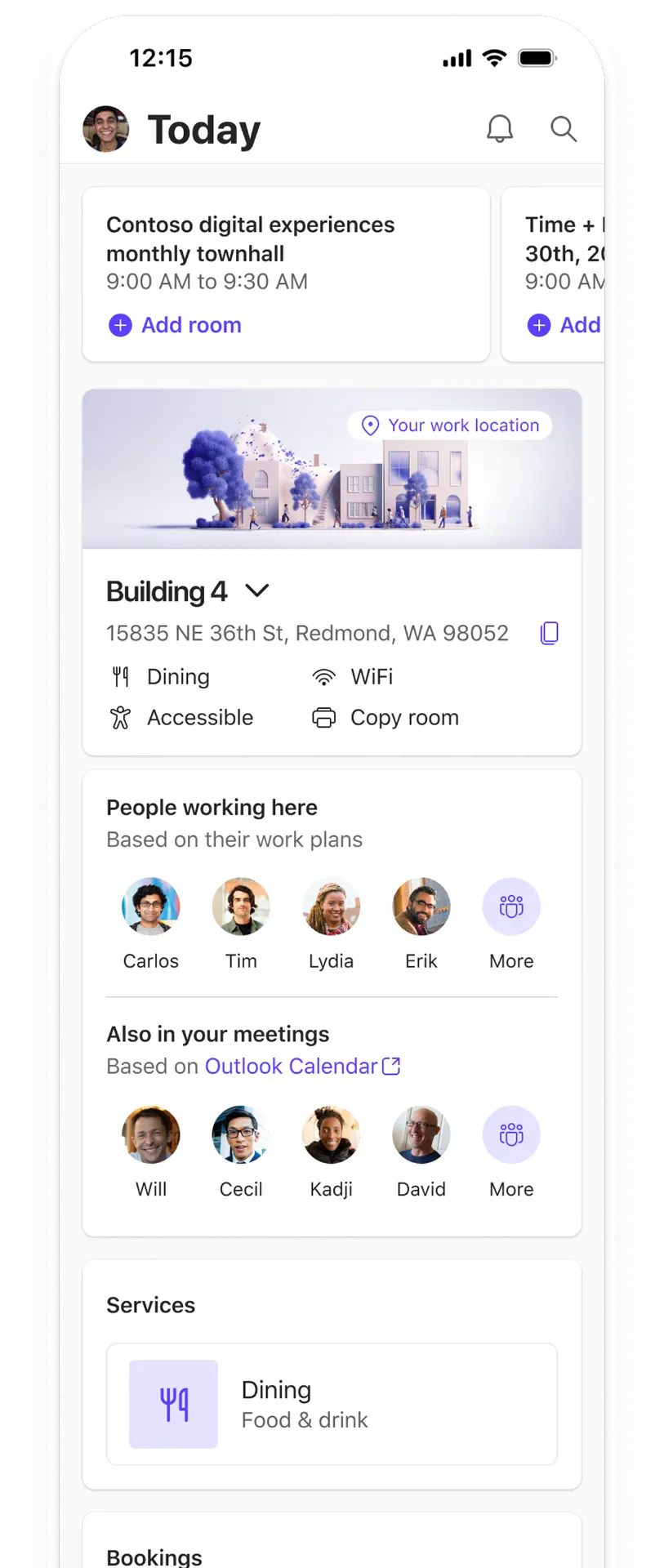
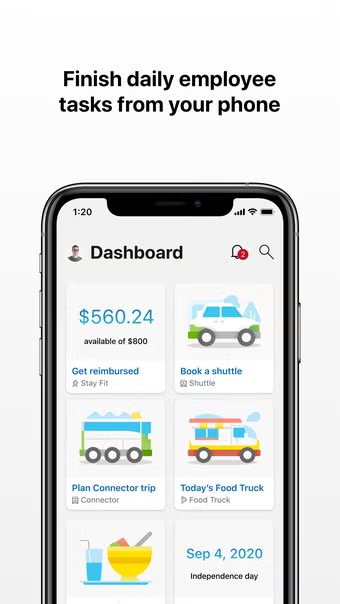
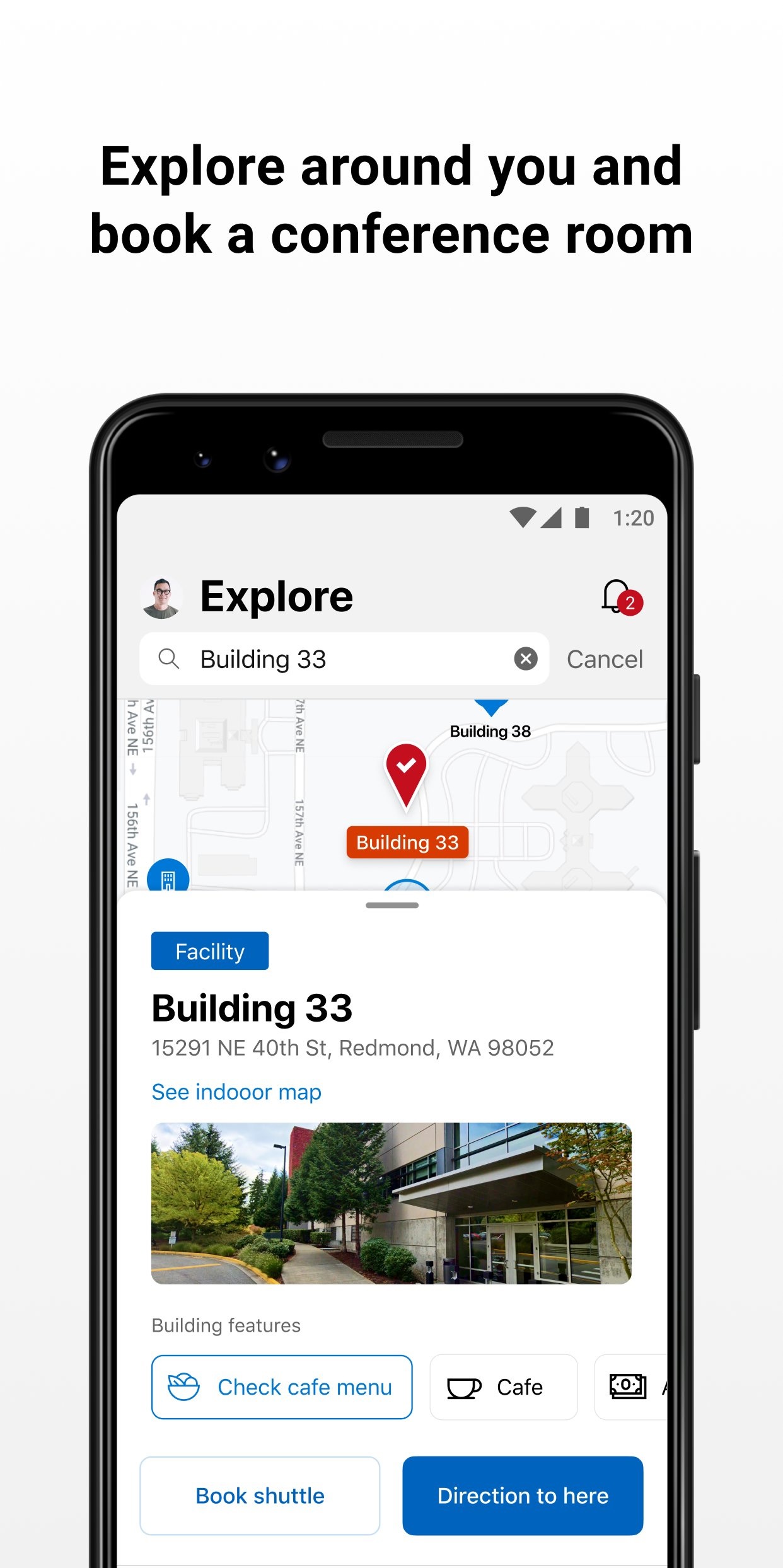
Accessibility was part of the design system from day one rather than a final audit, which is why the first release of Places Mobile launched fully WCAG-compliant.
Outcomes
- Scaled MyHub to more than 17,000 monthly active users and 163,000 sessions after the return to office.
- Helped deliver the first public preview of Microsoft Places across mobile, web and physical touchpoints.
- Launched the first release of Places Mobile fully WCAG-compliant.
- Shaped transit, kiosk and dining strategy for the Redmond East Campus.
What I learned
The obvious things like the natural friction of the day—commuting, eating, finding a spot to park and work—can yield great things.