Design Executive · UX Leader · Systems Thinker

Designing better ways for people to work, heal, learn, and adapt.

The best solutions rarely start with technology. They start with understanding what people see, hear, feel, and experience every day.

That belief has guided my work from emergency healthcare and medical devices to workplace experience, AI, and education.

“You can't design for someone until you've spent time in their shoes.”
Portrait of Christian Richard
Christian Richard · Seattle, Washington
25+

Years leading UX, service design, and innovation

14

Patents across healthcare and enterprise technology

3

FDA-cleared medical products brought from concept to market

Millions

Impacted through healthcare, workplace, and enterprise experiences

01 — How I Work

I help people navigate complex systems through design.

My process begins with lived experience, makes the whole system visible, and turns shared understanding into better decisions.

01

Understand the
Human Reality

Research reveals the gap between how systems are intended to work and how people actually experience them. I spend time with users, customers, operators, and stakeholders to find friction and unmet needs.

Field research · observation · unmet needs

02

Design for the
Whole System

Products do not exist in isolation. Every experience connects to services, technology, policy, environment, and people. Service design and systems thinking make those relationships visible.

Service design · systems thinking · ecosystems

03

Build Shared
Understanding

The best solutions emerge when design, research, engineering, operations, and business teams share ownership of the problem. Much of my work involves creating that alignment.

Co-creation · shared language · design direction

04

Turn Insight
into Impact

Research only matters when it changes decisions. I help teams move from insight to implementation while preserving the human needs that inspired the work.

Prototyping · implementation · measurable impact

02 — Personal Philosophy

Understanding Comes First

Throughout my career I've learned that the most important design tool is not software, methodology, or process. It's curiosity.

Whether observing a clinician during a resuscitation, talking with a facilities employee navigating a campus, mentoring students, or helping teams adopt new technologies, I begin the same way: by understanding the world through someone else's experience.

I want to see what they see.

Hear what they hear.

Feel the pressures, interruptions, limitations, and realities that shape their decisions.

Because people rarely struggle with the problem we assume they have.

Good design begins when we understand the problem they are actually living.

“The best ideas come after observation, not before it.”

03 — Philips Healthcare

Designing for moments where seconds matter.

Over 16 years, I led global experience design across emergency care, radiology, hospital operations, and medical-device ecosystems—where research, human factors, and patient safety shaped every decision.

Human problem · Emergency care

Philips FR3 Professional AED

Helping skilled responders read the situation and act quickly under extreme pressure.

Role

Interaction design · usability leadership

Human problem · Patient safety

Public Access AED

Helping an untrained bystander act with confidence during sudden cardiac arrest.

Role

Interaction design · usability leadership

Human problem · Field research

FR3 Case Manager — FDNY

Making rescue-data transfer fit the reality of a firefighter’s work after a call.

Role

Interaction design · usability leadership

Human problem · Service design

AED Service Design Ecosystem

Reframing an AED as a connected care and service ecosystem, not a standalone device.

Role

Design direction · service design · experience strategy

Human problem · Hospital operations

PerformanceBridge Radiology Services

Helping radiology teams see performance, coordinate service, and keep critical equipment available.

Role

Global design direction · experience leadership

Recognition · Proven in use

Design recognized in the field.

Recognition for work grounded in research, craft, patient safety, and measurable performance.

MFA Graphic Design, High Honors, RISD. BFA Graphic Design & Typography, UMass Dartmouth. Adjunct professor at the University of Washington and typography instructor at RISD.

14

patents granted across IBM and Philips Healthcare

3

FDA 510(k) clearances on shipped medical devices

17K+

monthly users on employee experiences I led

  • Red Dot Award — 2021 and 2009
  • iF Design Gold Award — 2009 and 2013
  • Print Magazine Design Awards
  • World Usability Day — Designing for Emergency Medical Services
  • 2026 Digi Award at RealComm — Most Intelligent Corporate Campus

04 — Microsoft — Employee Experience

Designing the Modern Workplace

The human-centered approach developed in healthcare applied to a new system: how people plan their week, navigate campus, find support, and work with AI across physical and digital environments.

MyHub · Employee experience

Designing for the Return of Serendipity

One of the challenges of hybrid work is that many of the informal experiences that help people feel connected become harder to create. Teams are distributed. Schedules vary. Buildings become destinations rather than defaults.

How might we help employees confidently navigate campus while creating more opportunities for connection, collaboration, and community?

Leading design and research across Microsoft's MyHub ecosystem, I worked with a multidisciplinary team responsible for helping employees plan, navigate, and experience the workplace.

Research became a critical driver of the roadmap. Rather than assuming what employees needed, we spent time understanding how they moved through their day, where friction existed, and which moments mattered most.

One notable effort was the Amazing Race initiative, which transformed campus exploration into an engaging discovery experience. Through direct user involvement and observation, we learned how employees formed mental models of place, movement, and connection. Those insights informed broader improvements across multiple experiences within the MyHub ecosystem.

The result was not simply better applications. It was a more cohesive workplace experience designed around human needs rather than organizational structures.

MyHub dashboard — daily employee tasks in one place
Explore — finding places, services, and rooms across campus
End-to-end journey — connecting transit, arrival, spaces, services, and digital touchpoints
East Campus kiosk — a physical MyHub touchpoint
Research in practice — workshops, observation, and direct employee involvement

Smart Buildings & Operational Intelligence

Designing systems that make better decisions.

The best workplace experiences are built on operational systems most people never see.

At Microsoft, I spearheaded cross-functional initiatives with Global Workplace Services (GWS), CBRE, engineering teams, data scientists, and workplace operators to transform facilities from reactive environments into intelligent systems capable of learning, adapting, and making more informed decisions.

The challenge wasn't simply collecting more data.

The challenge was connecting employee experience, workplace operations, and building intelligence into a single ecosystem that could continuously improve how the workplace functioned.

Through service design, operational research, data visualization, and AI-driven insights, we helped establish Microsoft's Smart Buildings program, creating employee-facing experiences and operational platforms that enabled more proactive management of workplace environments.

Operations journey — the system behind the employee experience
Capability blueprint — connecting operations, data, and experience

Microsoft Places

Reducing the daily friction.

A 0-to-1 product created in close collaboration between the Microsoft Places business group and MSD Studio, bringing weekly planning, teammate connection, desk booking, and campus navigation into one coherent experience.

Visit Microsoft Places
Places Web — weekly planning and workplace presence

Studio site walkthrough

MSD Studio · Design leadership

A modern way to engage design.

During significant shifts in the studio's support model, staffing, and organization, I created a new Studio website to guide education and establish a modern engagement model with product management and engineering partners.

Built with VS Code and Azure, the site made research and design easier to access, clarified how teams could engage the studio, and demonstrated a more direct way to work with PM and Engineering.

“Shared understanding, clear direction, and better decisions—not just artifacts.”

01

Shared problem

Research gives teams a common view of the human need.

02

Clear direction

Evidence and prototypes replace opinion.

03

Earlier learning

Research finds misunderstandings before engineering begins.

04

Shared ownership

Design, product, engineering, and operations work from one picture.

05

Better decisions

Tradeoffs are measured against the experience, not output volume.

ESS - Employee Self Service Agent

Putting AI in your pocket.

Employees needed routine tasks—PTO, benefits, commuting, and shuttles—to stop feeling like a search across disconnected systems.

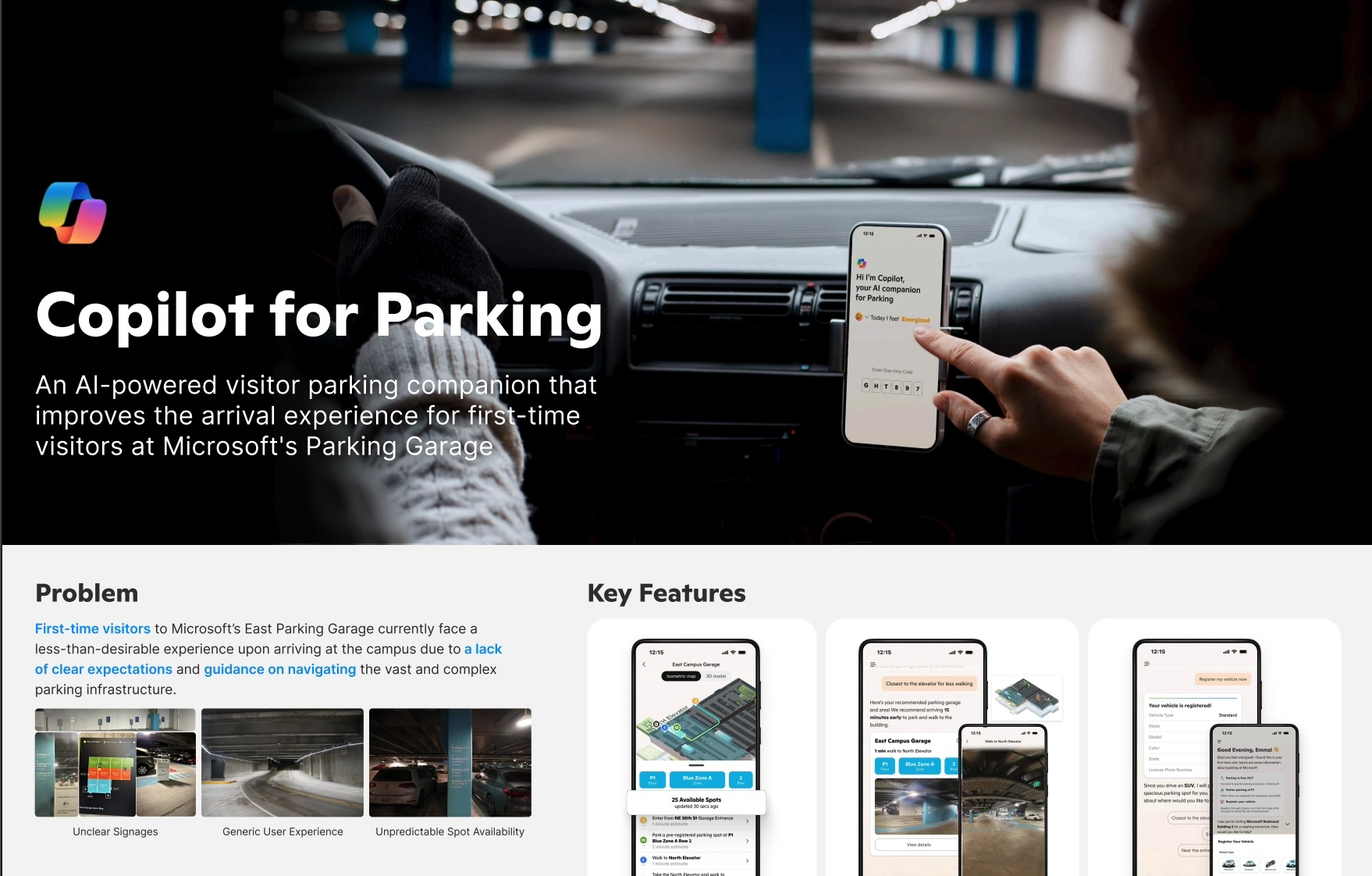
Campus Copilot — commute options and shuttle booking on the go
Employee Self-Service — PTO, benefits, and HR tasks in one agent

AI Workshop — design learning in session

AI discovery · workshops

Helping teams find meaningful uses for AI.

Product and business leaders learned to run human-centered AI discovery sprints through guided prompts, UX methods, and hands-on prototypes grounded in real user needs.

Workplace UX education series

Teaching the practice across Microsoft.

A multi-part series extending research, accessibility, content, interaction, and visual design practice to partner teams — with the impact measured, not assumed.

Series map — what each session covers and who it is for
The shared design process taught across teams

Impact series

87%

Satisfaction score across the series — measured session by session, not assumed.

Workplace UX Education Series — open the PDF

Executive Briefing Center

5/5

Average customer rating across Christian’s EBC engagements with external customers — sessions translating Microsoft’s workplace and AI practice into their own context.

Enterprise experience design

Global Event Management at scale.

Event teams needed one coherent way to request, plan, and run events instead of scattered spreadsheets and forms.

65K+ annual events supported

50% reduction in planning cycle time

163.5K items automated monthly

Event request and booking intake
Planner workspace and run-of-show
Portfolio view across live events

05 — Teaching & mentorship

Growing the Next Generation of Designers

Teaching at UW and RISD, mentoring at GIX, and guiding leaders through Microsoft’s Executive Briefing Center are extensions of the same design leadership practice.

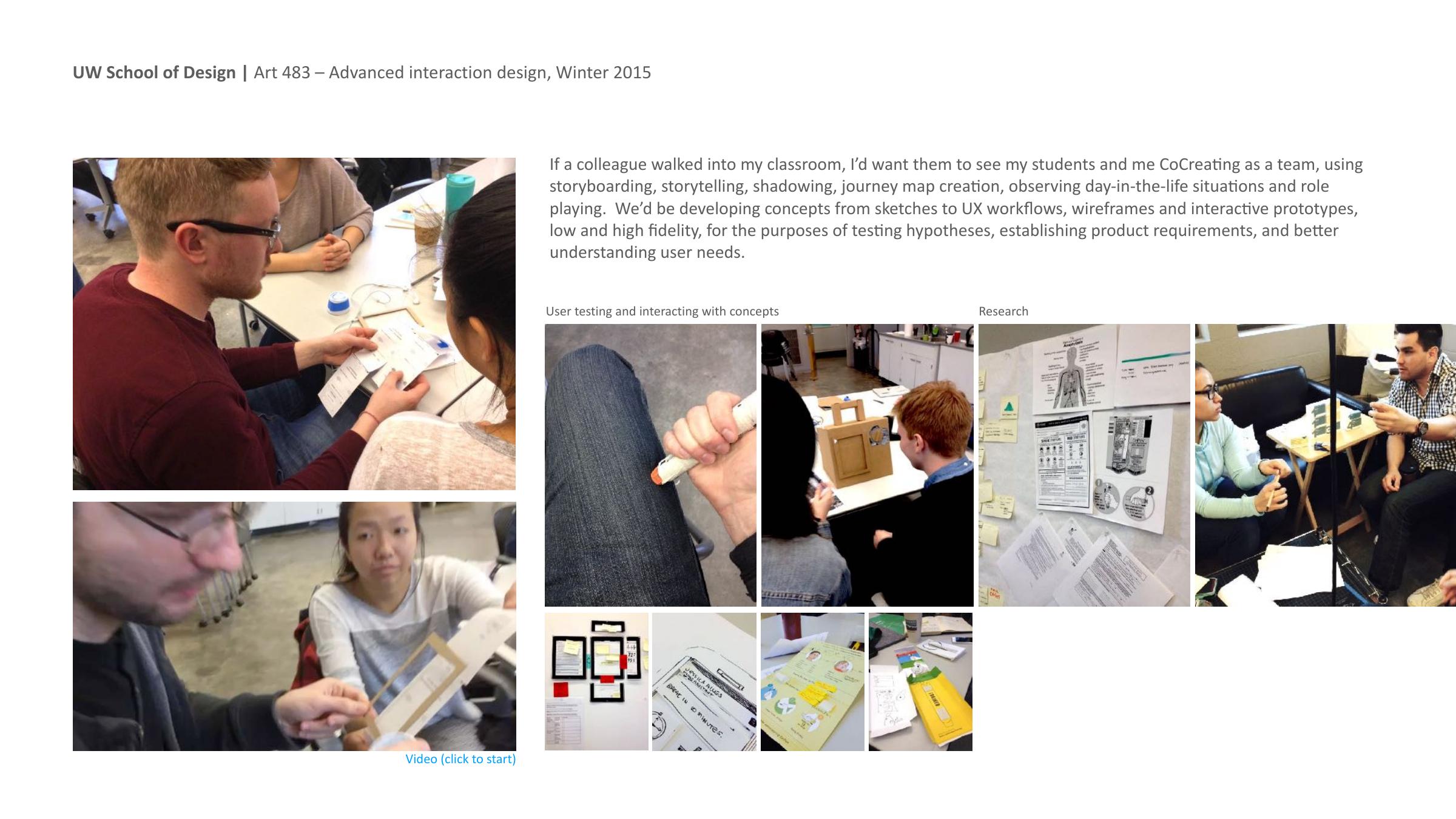
I teach through making, reflection, and honest critique. Learning moves fastest when the problem is real, the constraints are visible, and the outcome matters beyond the classroom.

Students working together in the UW School of Design Art 483 studio

University of Washington · School of Design

UW Design

Advanced Interaction Design, information architecture, web design, and visual storytelling—grounded in public health and digital systems.

Teaching portfolio — PDF

Course proposals

Two electives, ready to run.

Studio courses for graduate teams working on real problems with real constraints.

Elective 01

CoCreate Studio

A rapid-cycle studio pairing two-week collaborative sprints with real problems, working prototypes, and critique.

2-week sprints · collaborative teams · AI-native making

Elective 02

Using Ambient Rhythms in UX Solutions

Students study how rhythm, attention, and environment shape behavior, then design interfaces that inform without demanding.

Temporal cadence · cross-sensory systems · calm technology

Teaching & mentoring philosophy

I teach the same way I lead teams: through making, reflection, and honest critique. Learning happens fastest when the problem is real, the constraints are visible, and the outcome matters to someone beyond the classroom.

06 — Making as systems practice

Making

My sculpture explores many of the same questions that drive my design work: rhythm, systems, movement, feedback, materiality, and how independent elements create coherent experiences.

Designing products, services, organizations, and physical objects begins with the same act: paying attention.

Outdoor wall piece — steel ribbon and painted discs
Wall piece, oblique view
Interior line drawing in steel, walnut ledge
Garden kinetic — cedar blade and steel arcs
Tuning a garden piece on site
Detail — turned discs and weathered strap steel

Creative disciplines

Rhythm as a way of seeing.

My RISD thesis explored rhythm and the senses as a foundation for human interaction. The inquiry continues through steel, wood, sand, light, photography, and music.

I build pieces that respond to their surroundings. Steel gives structure, wood gives warmth, and weather supplies the motion—separate parts finding a shared tempo.

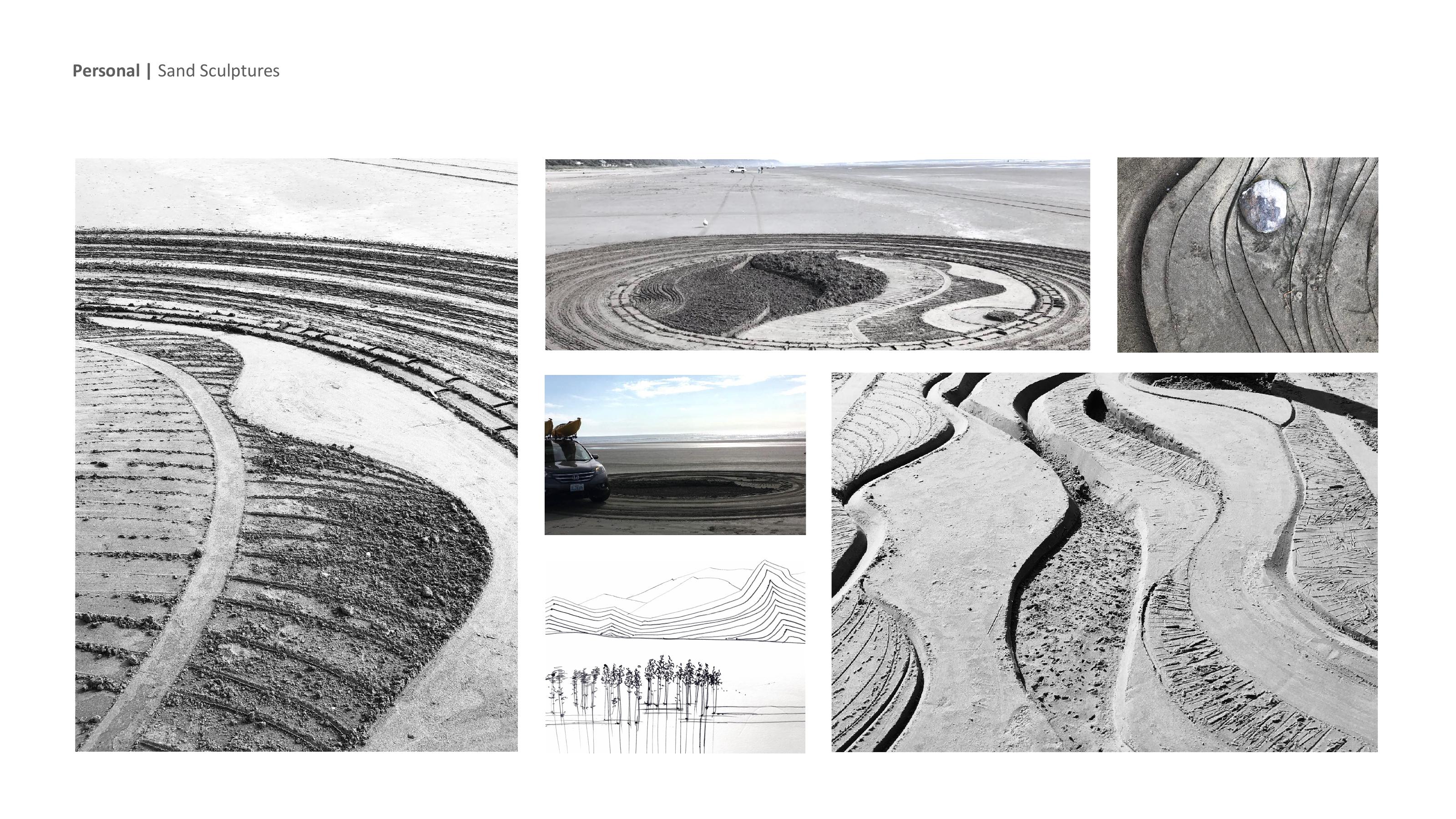
Large-scale sand sculpture from Christian Richard's personal practice
Large-scale sand sculpturePattern, rhythm, patience
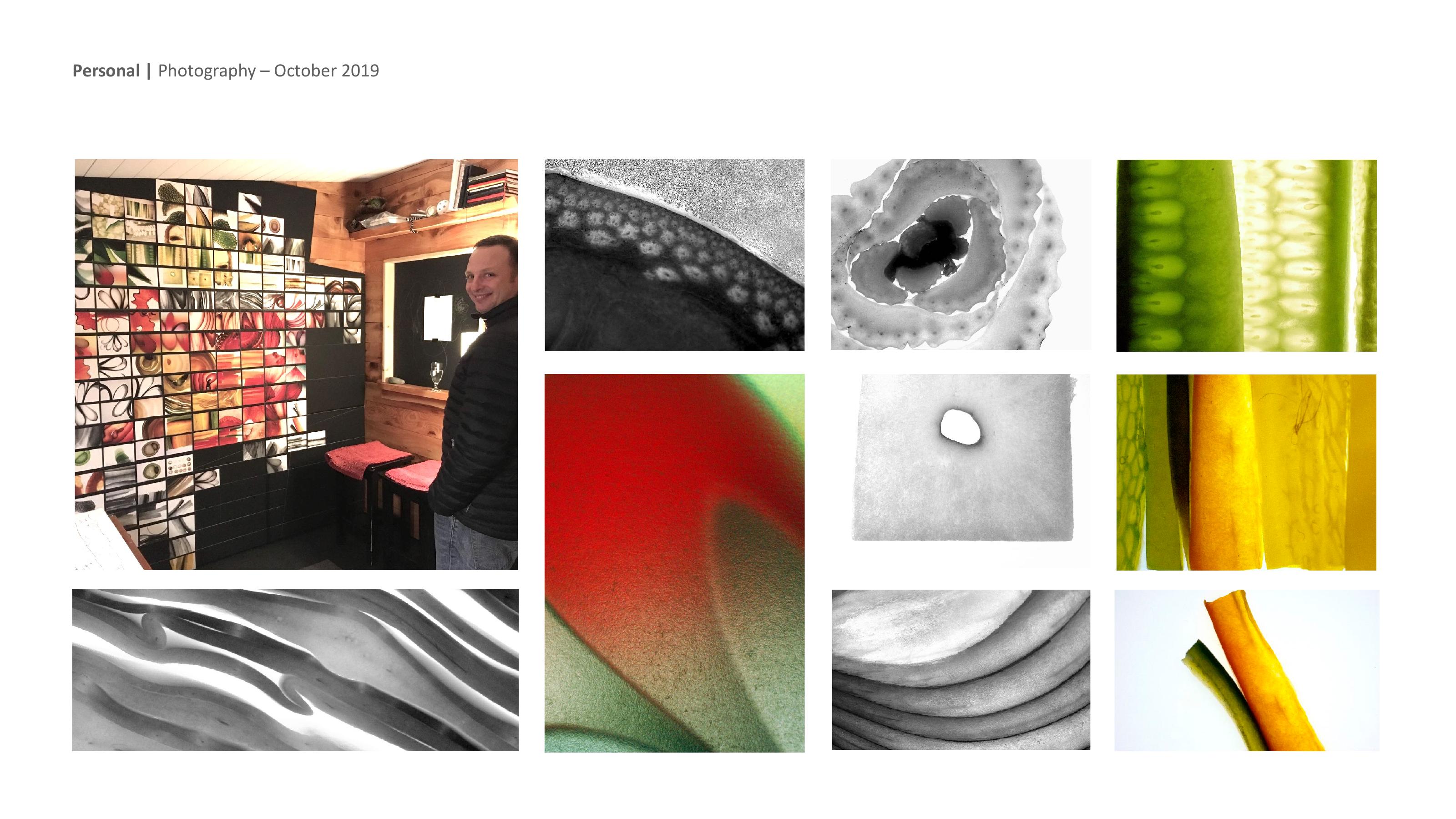
Macro photography from Christian Richard's personal practice
Macro photographyAttention, scale, hidden systems
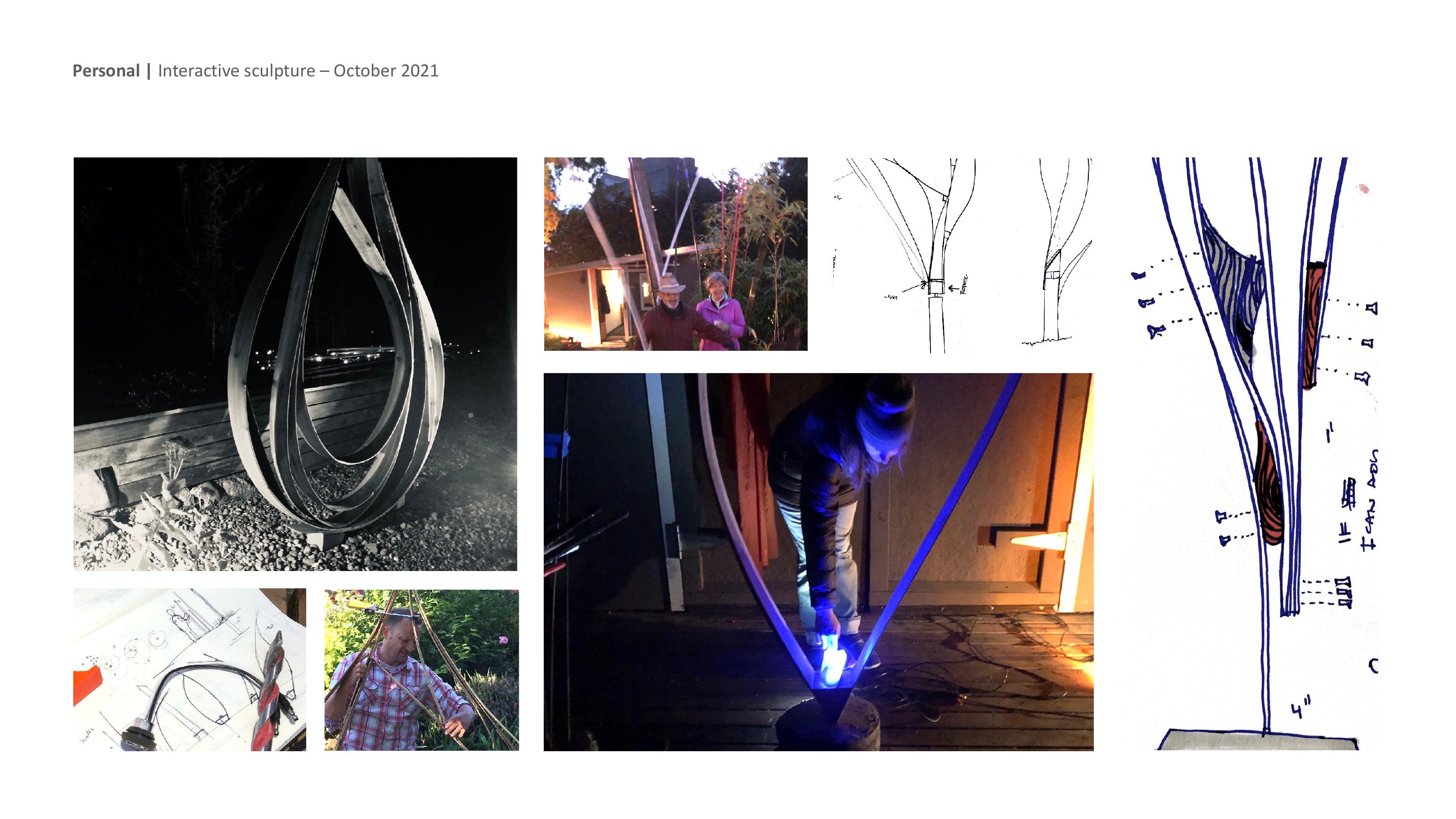
Interactive light art from Christian Richard's personal practice
Interactive light artMaterial, motion, participation
Kinetic motion

The pieces move with the weather, not on a motor.

Featured Exhibitions

Exhibition — Perry and Carlson

September 01 – September 30, 2026 · Mount Vernon, Washington

Visit Perry and Carlson

07 — Working ideas

Working ideas

Notes on design, research, systems, and the practice of leading across disciplines.

Human-centered AI

Start with the human need, not the technology

AI becomes useful when it addresses a need people can name and feel.

Leadership

Leading cross-disciplinary teams in high-stakes work

When clinicians, engineers, and business leaders disagree, they are usually arguing about which risk matters most.

Creative practice

What rhythm teaches about systems design

A band is a distributed system with no central controller and no tolerance for latency.

Service design

The best workflow may have fewer steps

Before improving a step, ask whether people should have to do it at all.

08 — Contact

A good conversation is a useful place to begin.

If you’re shaping a complex experience, building a design practice, or exploring how research and systems thinking can move the work forward, I’d be glad to connect.

Emailcrhonda1@gmail.com